Becoming a Leader & Developing Leadership Skills
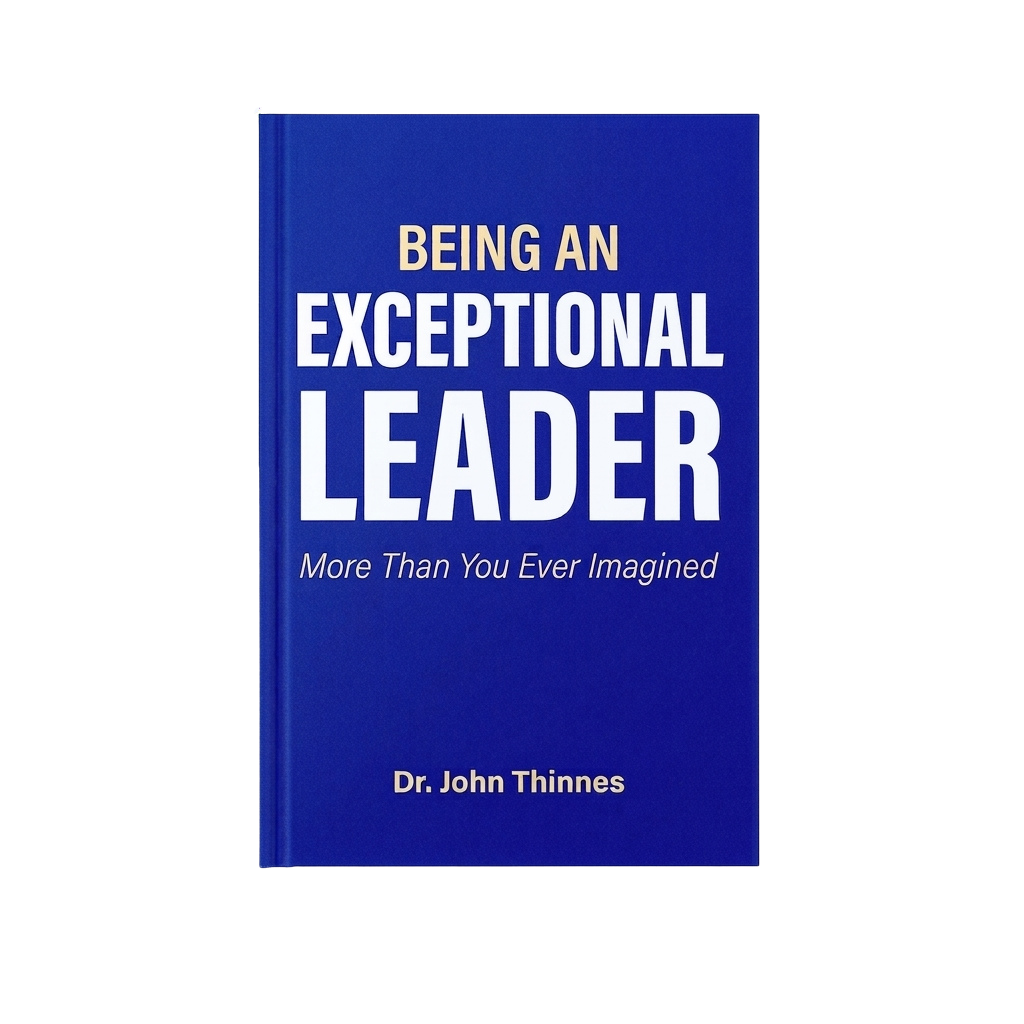
Stepping into a leadership role requires a fundamental shift in how you think, communicate, and achieve results. Being an Exceptional Leader by Dr. John Thinnes delivers a hands-on manual designed to help professionals master this transition. Instead of high-level theory, every concept connects directly to a conversation script, a targeted question, or a decision framework you can use in your very next one-on-one.
Whether you currently hold a management title or are preparing for your first supervisory role, this guide bridges the gap between overarching philosophy and daily workplace execution. It stands out among books on becoming a leader by focusing on practical behaviors that yield immediate team impact.
Behavior-Based Habits & Everyday Frameworks
Leadership is not an innate genetic trait, it is a set of repeatable behaviors that can be practiced and refined. Instead of enterprise-level CEO case studies, Being an Exceptional Leader focuses on the daily situations you encounter on the ground:
- Setting Clear Expectations: Move past vague directives by mastering phrasing that team members can accurately repeat back.
- Active & Structured Listening: Ask targeted questions that get past safe, surface-level responses to identify true team bottlenecks.
- Feedback Without Conflict: Use a structured sequence to correct performance while keeping trust and rapport intact.
- Building Trust Mechanics: Develop small, visible follow-through habits that compound credibility across months of supervision.
- Self-Awareness Checkpoints: Evaluate honest prompts to uncover where personal ego or unexamined assumptions cost your team momentum.
Practical Tools for Frontline Preparation
Plenty of books about becoming a leader assume you already manage an entire corporate division. Being an Exceptional Leader is written specifically for first-time supervisors, technical experts inheriting direct reports, and individual contributors stepping up to new responsibilities.
Gallup research consistently shows that managers account for roughly 70% of the variance in team engagement. Because your daily actions carry the highest impact on team performance, choosing practical books on leadership for beginners is essential during early transitions.
If you are curating books for aspiring managers or building an internal library of books for emerging leaders, each section functions as an independent, standalone module. It stands out among books for becoming a leader because it treats leadership as a daily discipline rather than a one-time promotion.
Guiding Rising Professionals Through Career Transitions
Stepping into a management role requires a distinct shift in mindset, communication, and decision-making. Different stages of career growth demand specialized learning tools:
- Foundational Preparation for Aspiring Managers: Early in your career, learning how to shift from individual execution to team guidance is critical. Readers exploring books for aspiring managers and books for emerging leaders will find actionable steps to build authority, set clear boundaries, and manage former peers smoothly.
- Immediate Support for First-Time Supervisors: The first 90 days in a supervisory role often determine long-term success. If you are comparing the best books for aspiring leaders or searching for the best books for new leaders, this text provides the exact scripts and agendas necessary to establish early momentum without micromanaging.
- Continuous Improvement for Experienced Managers: Even seasoned managers encounter team friction, reorganizations, or shifting priorities. When reviewing books on becoming a better leader, managers often look for concise toolkits to refresh their operational habits, improve team alignment, and refine their daily coaching methods.
Curating the Best Books for New Leaders and Development Programs
Selecting the right developmental resources depends on matching content to your current career stage and organizational needs:
- For Early Career & Aspiring Leaders: When searching for the best books for aspiring leaders, look for guides that teach core habits early. This title offers immediate value for anyone building a list of books on becoming a leader.
- For Onboarding First-Time Supervisors: As one of the best books for new leaders, this manual offers day-one survival tools that make it a standout choice among books on leadership for beginners.
- For Ongoing Skill Building: Among top-rated books for developing leadership skills, this guide serves as a practical desktop reference. It complements traditional books on becoming a leader by focusing on weekly execution.
- For Mentorship & Cohort Learning: HR teams and mentors looking for books on becoming a better leader frequently assign individual chapters to guide weekly discussions across manager cohorts.
Integrating Theory with Practical Execution
Classic leadership texts tell you who to become, while tactical guides focus on specific questions to ask. Being an Exceptional Leader connects the two, guaranteeing that self-awareness principles and coaching habits show up seamlessly in the same conversation with the same employee.
Key Advantages of This Manual
- Practitioner Insight: Written by an executive who has hired, coached, and managed real-world teams through growth and reorganizations.
- Immediate Application: Every concept is testable within a week, fitting into busy calendars without requiring complex jargon or proprietary frameworks.
- Desk Reference Design: Structured with short 10-to-15-minute chapters, reflection prompts, and dedicated margin space for active note-taking.
Frequently Asked Questions
What Is the Single Most Important Skill for a New Leader to Develop?
Clear, consistent communication. Research from organizations like the Center for Creative Leadership indicates that misaligned expectations and avoided conversations cause most frontline team failures. Developing structured feedback habits early is critical when working through books for developing leadership skills.
How Does Emotional Intelligence Impact Leadership Effectiveness?
As Daniel Goleman documented in What Makes a Leader? emotional intelligence, specifically self-awareness and empathy, separates superior leaders from merely competent managers. This manual builds on that foundation by providing practical scripts to apply emotional intelligence during high-stress conversations.
What Are the Best Books for New Leaders to Read First?
The best books for new leaders combine foundational self-awareness with practical execution tools. While classics by authors like Warren Bennis establish overarching philosophy, pairing them with applied manuals gives new supervisors actionable steps for their first 90 days.
How Do You Transition From Managing Tasks to Leading People?
The transition requires shifting your focus from individual execution to enabling others. It involves setting clear outcomes, delegating responsibility rather than just tasks, and establishing routine one-on-one check-ins. If you are comparing books on becoming a leader, look for guides that offer decision frameworks for when to coach versus when to direct.
Order Your Copy Today
Whether you are looking for the best books for new leaders for yourself or sourcing bulk copies for an enterprise development program, Being an Exceptional Leader is available in paperback, ebook, and audiobook formats, order yours today. Volume pricing, facilitator guides, and team assessments are available for cohort orders.